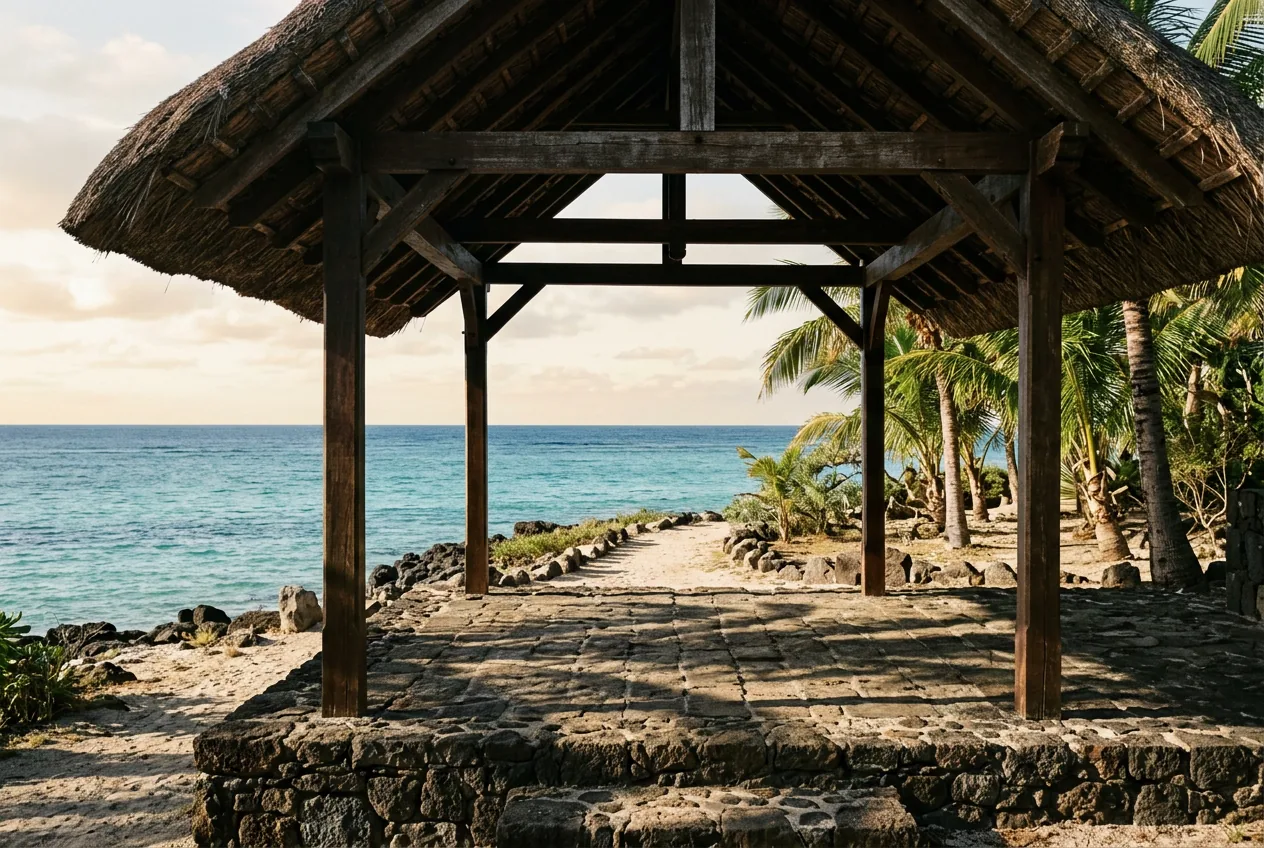
There are two ways to build hospitality at these latitudes. Import a model — oversized air conditioning, container-shipped materials, a silhouette that could be anywhere. Or build with the place: local timber, volcanic stone, deep roofs that make shade and catch the trade wind.
We chose the second, and not out of romanticism.
The economics of the vernacular
A pavilion designed for its climate consumes less, ages better and rents higher: guests who travel this far pay precisely for what cannot be photocopied. The rate premium observed on properties built with the materials of the place, in our area, is real and persistent — it comfortably funds the extra care.
What cannot be delegated
From 9,000 kilometres away, the temptation is to hand everything to a project manager and read reports. We did otherwise: one of the house's own on site one week per month, the same craftsmen from one building to the next, and a simple rule — no milestone signed off on photographs. Timber is touched; stone is looked at in the rain.
The site report says "compliant". The deck says whether it is beautiful. Both pieces of information matter, and only one travels by email.
The calendar of seasons
Here the schedule is not administrative, it is meteorological: pour before the wet season, cover before the rains, deliver before high season. Slipping one stage by six weeks can mean slipping delivery by half a year. It is the variable files always underestimate — and the first one we check. Our Indian Ocean base is organised around these constraints: seasons, craftsmen, presence.