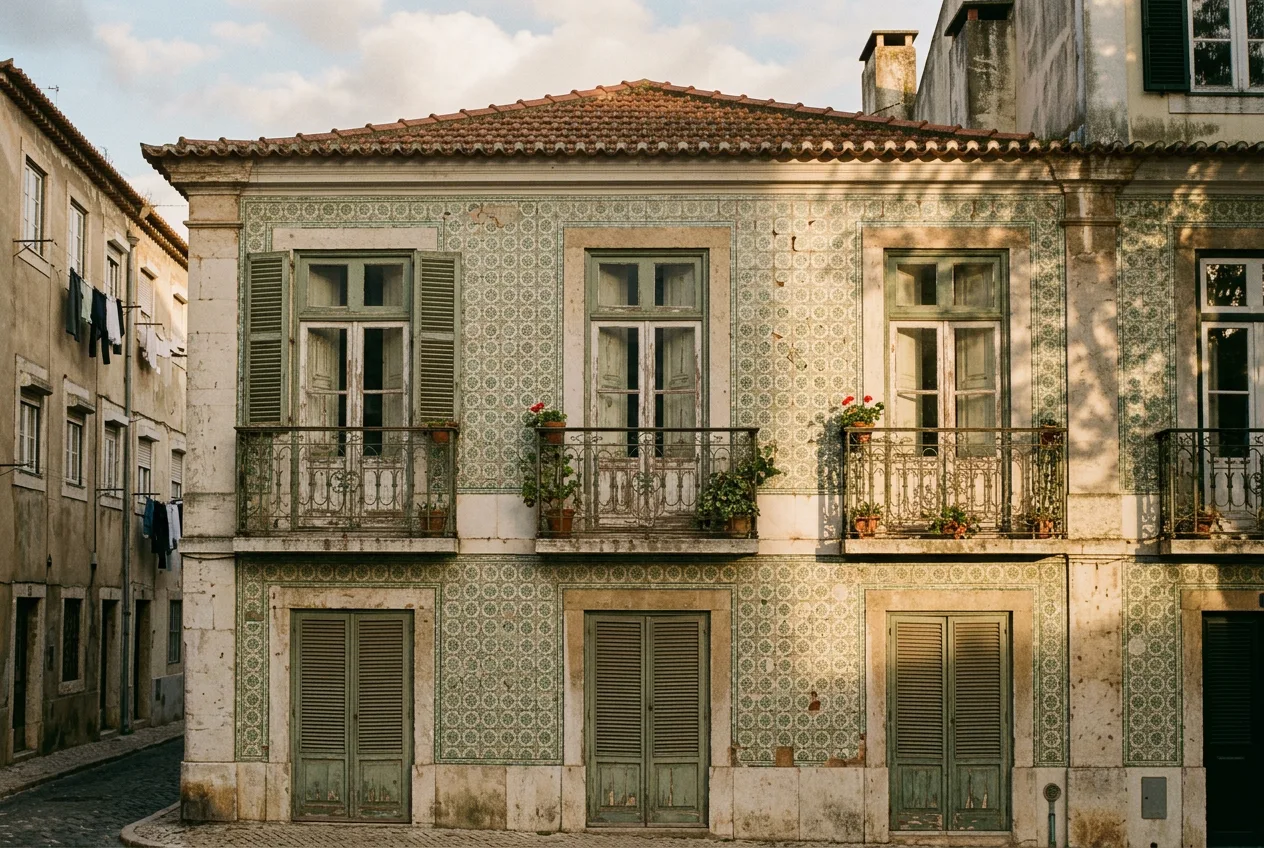
There is a rule we apply everywhere, and Portugal illustrates it well: property is best held as close as possible to its own law. A Portuguese building lives in Portuguese law — leases, planning, co-ownership, litigation. Housing it in a local company aligns ownership with the asset's legal reality, simplifies dealings with the administration, and keeps the operation legible for a future buyer.
A tax rate walking down the stairs
Portugal has committed to a staged reduction of its corporate income tax: 20% for 2025, 19% for 2026, with an announced trajectory towards 17% by 2028. Small and medium companies enjoy a reduced rate — around 15 to 16% — on the first €50,000 of profit. Municipal and State surcharges may apply on top, mostly to large results. For a mid-sized real estate vehicle, the overall reading remains favourable and — above all — predictable, which matters more.
What an acquisition costs
Entry has a price. The municipal transfer tax (IMT) is progressive and depends on the nature of the asset — housing, commercial property and land follow different scales — and stamp duty adds 0.8% of the price. These entry costs, together with notarial and registration fees, belong to the operation's true cost basis: a file that omits or understates them does not pass our committee.
The entry cost is not a closing detail. It is the first line of the cost basis — the one you never renegotiate.
The Lda, the workhorse
The most common form for our purposes is the sociedade por quotas — Lda —, the functional equivalent of a French SARL: quick to incorporate, free capital, flexible management. For a given operation, the Lda holds the asset, carries any debt, collects the rents and bears the local tax — while the investment vehicle above organises the investors' rights. That two-storey architecture cleanly separates what belongs to the asset (Portuguese law) from what belongs to the capital (the agreement between investors).
The real country
Then there is what no tax scale shows: a serious land registry, conservatórias that answer, rehabilitation firms that know how to work old stone — and historic centres whose heritage protection strictly frames what may be touched. Rehabilitating in Lisbon or Porto means composing with the existing fabric, party walls and the archaeology of the built. It is slower than building new. It is also, often, where the value lies — and the ground on which our review of the Faro file advances, piece by piece.